
Nature Connection
Featuring: Dr. Kate Howlett

As a graduate student in plant ecology, I restored an old farm field to native prairie. The field was in the middle of encroaching suburbia, and as the grasses and wildflowers I planted on the 40-acre site grew tall and thick, they provided a refuge for a variety of animals—including humans.
I was delighted by these human visitors. In fact, to help draw them in and encourage their sense of belonging, some of my study plots included plants that are useful to humans as food or medicine, or are of other cultural importance. Above all, I hoped people would develop their own relationship with the place and the plants and animals that lived there.
My guest, Dr. Kate Howlett, studies these relationships between humans and the natural world. What connections do we already have, and what new connections can we create? How can we develop and strengthen these ties, in big and small ways? There are no quick fixes to the biodiversity crisis and other environmental problems we face today. But through personal essays, photos, and insights into research, Kate highlights moments of beauty and potential. Her work inspires hope and the long-term commitment to change that will help bring us to a better future for humans and the other beings on our intricate planet.
Interview: Dr. Kate Howlett
How do you describe your work?
I’m still trying to figure this out! In my Substack bio, I’ve opted for ‘writer and social ecologist’, which seems to cover it.
By training, I’m a scientist, more specifically, an ecologist. I have a PhD in zoology, which I did in a research group that focuses on insect ecology. But I basically did my own thing. My PhD research was a medley of pure ecology, public engagement and social science, which I just loved doing since I’ve always resisted boxes. My research is on children’s relationship with the natural world—how this forms and why it matters, both for conservation and well-being.
Now, I write about this work. I’ve always loved writing, and eventually I got fed up with keeping writing and science separate.
I’m convinced the world doesn’t really need more research to take action on our environmental crises. We need people to be engaged in a more nuanced way. It isn’t anyone’s fault that they aren’t. It just isn’t being communicated in a way that people relate to, that matters to people. So that’s what I’m trying to do.
What aspect of your work has the most personal meaning for you?
Right now, I’m excited by the personal pieces I’ve begun writing. I had no intention of writing these when I started on Substack, or at least, not consciously anyway. I always put myself in my writing because this is what connects with people, but I’m much less comfortable with actually writing about myself. I’m excited that I seem to be growing more confident in doing this.
The more I write about the science behind nature connection, the more I feel able to use my own relationship with nature and that with my late dad to illustrate my arguments. These two relationships are very closely entwined for me, so in doing this work I am starting to unpick a lot of my own knots and grief in a much more public way than I had planned. But if it helps people, then I am all for it!
How are science, art, and writing part of your work, and how is the interaction between these areas important to you?
Very recently, I started writing poetry. My poems aren’t always directly related to my work on nature connection or my long-form writing. But nature and how I relate to it is definitely a recurrent theme.
I don’t really view my poetry as writing. Writing, for me, is about actively thinking through a viewpoint or a story and crafting it into something coherent, something with a point. Poetry, on the other hand, feels completely raw and flowing. I never sit down to write a poem. Words, lines or imagery come to me, and then I grab a piece of paper and see what comes out.
This all sounds very abstract, but it feels freeing, like an outlet for creativity and emotion.
Strangely, allowing myself to indulge in this creative outlet has made my long-form writing better because the words in my mind are less confused and jumbled up. Allowing myself to write poetry feels like scooping the foam off the top off a hot chocolate—it lets me access the hot chocolate beneath in a purer, cleaner way.
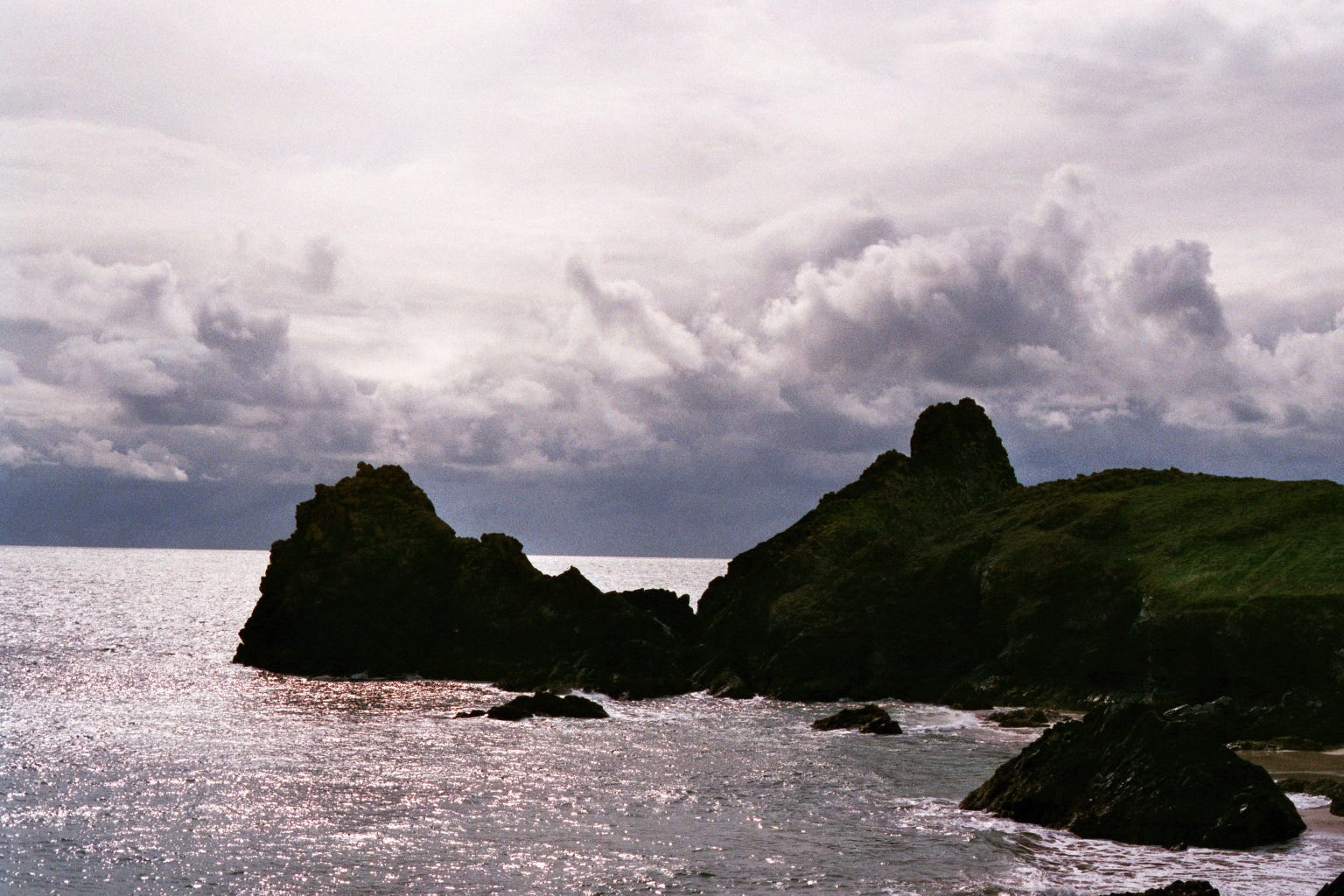
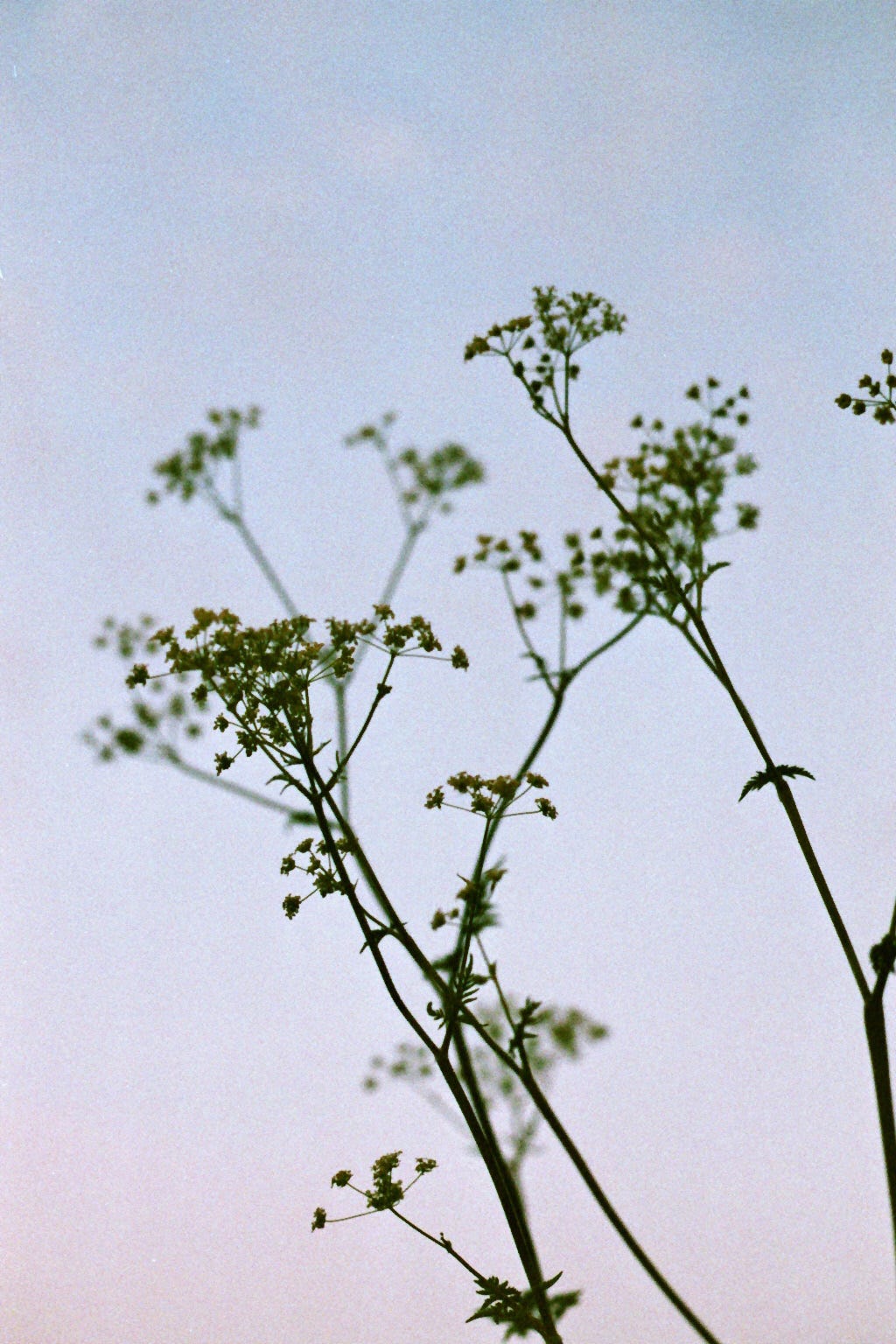
I share my poetry on Instagram, whenever I feel a burst of courage, along with my film photography, which is mainly nature-focused.
Is there a particular scientific or environmental problem that feels important to you? What do you do about that?
The biggest problem for me is disconnect from the environment—people viewing care for our planet as an optional interest, rather than an essential concern. I don’t blame people for this, and I don’t think we reach them by shouting facts loudly. They know the facts. They just don’t think the facts matter to them, either because the facts are too overwhelming and people feel powerless, or because people are so disconnected from the environment that the impacts on them just don’t feel real.
For me, what’s scary isn’t really climate change or biodiversity loss—I mean, it is obviously. But what’s far more chilling is how many people aren’t scared by this. This is the problem for our time, I think—figuring out how we can repair this relationship. This is why I write. I try to write with kindness and empathy. I don’t want anyone to feel like my work isn’t for them. There is a way to reach everyone. We are all human.
How do your identity and perspective affect your work?
I hesitate to admit this, but a huge part of my identity is my work. I don’t mean this in a workaholic kind of a way. (I’m not saying I’m not one, but I’m working through this. It’s separate.) What I mean is I’ve tried doing the job with a nice boundary between how you put your skills to use to earn an income, and you come home at the end of the day and leave work at the office. But I can’t do it. I just don’t think I can live like this.
I don’t want to use my skills to help some other organisation out in exchange for a paycheck. It all feels so transactional. I want to use my skills to have some impact on the world that I am proud of.
That’s not to say I don’t have other parts of my life that aren’t my work—I adore women’s football, reading feminist literature, all animals, friends, good food—but my perspective on the world and my writing very much are my work.
Are you interested in collaborating with other groups or individuals on science-art-writing projects?
Yes, absolutely. I enjoy working with people whose mission I share and whose work I admire. Beyond this, I am open to anything fun and worthwhile!
Which four famous guests (artists, scientists, musicians, philosophers, etc., dead or alive) would you invite to a dinner party and why? (Rebecca Hooper, 031)
I love this type of question because I often think about it, and my answer is always different at different points in my life.
Right now, I would choose Eileen Power (economic historian), Nina Simone (musician), Lily Parr (footballer) and Ursula K. Le Guin (writer). I have no idea what conversations would happen in that room—they come from such different walks of life and times. But I would give anything to listen to them talking late into the night over a bottle of wine.
They all have truly unique perspectives, refusing to be moulded by the conventions the world threw at them. A room full of so many free thinkers would be my dream place to be, and I would drink it up!
Who else influences and inspires you?
Okay, this is going to surprise people. I adore Cher. She has inspired me since I was about seven years old, and I could watch her walk up and down a stage on repeat forever. She is unapologetically herself, she doesn’t care what anyone thinks of her, she refuses to be put in a box, she has a very strong sense of moral justice, and she is kind.
I have many favourite quotes, but I’ll leave you this one:
‘I’ve had high highs and low lows, and you’ve just gotta keep going. I always think of myself as a bumper car, and if you hit a wall, you go, ‘OK, what am I gonna do?’ And you back up and you go in another direction. There are endless possibilities.’
Thanks so much, Kate!
You can learn more about Kate and her work on Natural Connection, her thoughtful and inspiring Subtack, as well as on her website or Instagram.
I love the way that you recognized the value of people coming to visit the prairie restoration. I've always believed that the only way to move conservation forward is by helping to nurture relationships with place and its inhabitants. The interview was fantastic! I'm a big fan of Kate's work. Thanks for sharing!
Absolutely loved reading this interview, thank you both!! I adore Kate's substack - she's doing such vital work, and doing it brilliantly. And also, that dinner party group! What I'd give to be a fly on the wall! x